
01
Before work starts
Record accessible existing conditions, agreed work areas, delivery routes and neighbouring interfaces before demolition or installation changes the scene.
Inspect while the evidence can still change a decision, not only after important work has been covered.
A renovation checkpoint is useful when it protects a real decision about existing condition, concealment, visible workmanship, handover or repair. The right number and timing depend on the actual project, contract and responsible professionals.
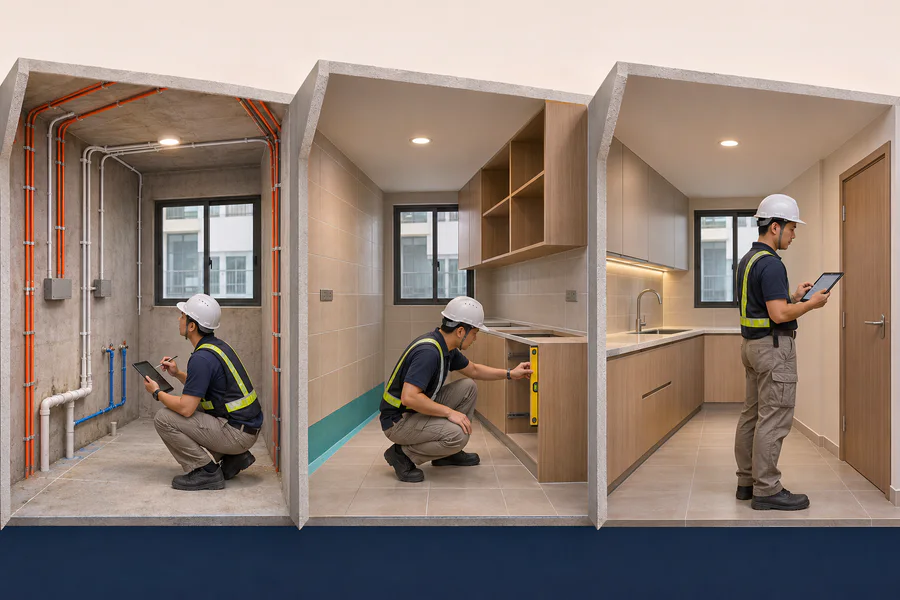
A planned sequence can preserve evidence of visible services, workmanship during finishing and the completed condition before handover.
Concept illustration. Observable scope depends on the renovation stage, safe access and the agreed inspection purpose.More visits are not automatically better. Each checkpoint should protect evidence or a decision that cannot be recovered easily later.
Record accessible existing conditions, agreed work areas, delivery routes and neighbouring interfaces before demolition or installation changes the scene.
Keep the responsible consultant, contractor and specialist records where the project has defined an approval point before ceilings, panels or other work are covered.
Record visible alignment, damage, incomplete work and interfaces against the supplied approved references when those records apply.
Review agreed rooms and components while access is clear, then record each open item with its location, evidence and expected action.
Reconcile incomplete work, reported repairs and outstanding specialist records, manuals, warranties or as-built information.
Recheck the original item and intended outcome. A changed appearance does not automatically answer a concealed or performance question.
A small project may need a pre-work record and handover review. A complex project may need additional coordinated checkpoints.
Confirm the project stage, approved references, responsibilities and decision each visit must support.
Record the starting point and evidence that may be concealed or changed.
Inspect the agreed accessible work and keep limitations and specialist boundaries visible.
Track open items, responsible records and repair verification without deleting the original baseline.
Project records that make checkpoints more useful
See a property-matched price first. Contact details are requested only after you choose an option.
Get Instant QuoteIt can support handover decisions for visible accessible work. It cannot recover evidence concealed earlier or replace required consultant and specialist inspections.
DPM records accessible observable conditions within the confirmed scope. Design approval, certification and statutory acceptance remain with the responsible parties.
Use your actual contract and obtain appropriate professional advice. DPM does not direct payment or make legal conclusions.
Provide the approved scope, drawings, schedules, variations, test records and handover requirements when they apply to the work being reviewed.
No general visible review can do that. The appropriate authorised inspection, specialist evidence and responsible certification are required.
No phone number is needed to view the available price.
Get My Instant Quote